
Table of Contents
Introduction: Understanding a 3 Tier Cake for 100 People
Planning a cake for a large event, like a wedding, anniversary, or milestone celebration, can feel overwhelming, especially when you need to feed around 100 guests. A 3 tier cake for 100 people is a popular choice because it balances elegance, size, and practicality. Each tier serves as a portion of the total servings, and when done correctly, it ensures that everyone gets a piece without wasting cake or running short. Beyond just the size, selecting the right tiers, flavors, and decorations can make the cake both a centerpiece and a treat that guests remember. Whether you are working with a professional baker or planning a homemade cake, understanding the dimensions, servings, and design possibilities is essential. A proper plan not only makes serving easier but also helps you stay within budget and create a cake that complements your event theme perfectly. In this guide, we will explore how to choose the right 3 tier cake, calculate servings accurately, and make sure your cake for 100 people is both beautiful and practical.
What Does “3 Tier Cake for 100 People” Mean?
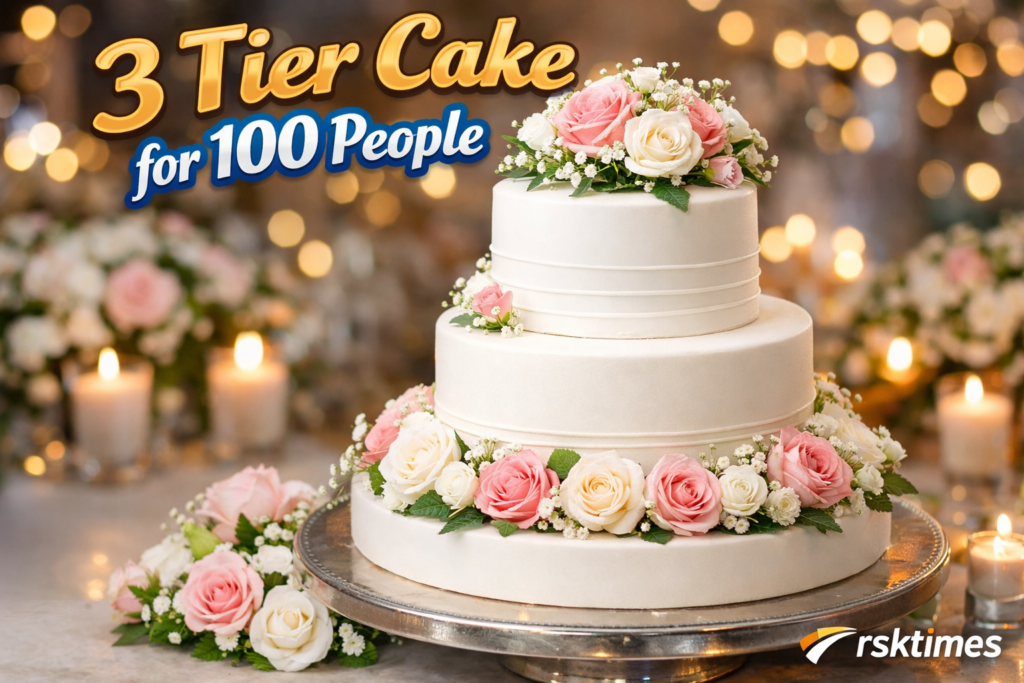
When we talk about a 3 tier cake for 100 people, we are referring to a cake that is carefully sized and structured to provide enough servings for a large gathering, typically a wedding, corporate event, or big celebration. Unlike smaller cakes, a 3 tier cake is designed with multiple layers that are stacked one on top of another, with each tier contributing to the total number of servings. The tiers usually differ in size, with the largest tier at the bottom, a medium-sized tier in the middle, and the smallest tier on top. This design not only allows the cake to serve more people but also creates a visually stunning centerpiece that enhances the overall decor of the event. For example, a common combination like 10-inch, 8-inch, and 6-inch tiers can comfortably serve around 100 guests, depending on how the cake is cut and whether slices are standard wedding-size pieces or larger party servings. Understanding the purpose of each tier and how it contributes to the overall servings is crucial for event planning, ensuring that no guest is left without a slice and that the cake looks proportionate and elegant.
The concept of servings is often misunderstood because not all slices are the same size. For weddings, slices tend to be smaller, roughly one inch by two inches, so more guests can enjoy a piece, whereas party servings may be larger, reducing the total number of servings slightly. The 3 tier structure also allows flexibility, as bakers can adjust the height and layers to increase or decrease the total servings based on the exact number of guests. This makes it easier to plan for contingencies, like extra guests or second servings. A properly planned 3 tier cake ensures that the visual appeal and the practicality of serving 100 people go hand in hand, offering not only enough cake for everyone but also a display that reflects the importance of the celebration. With careful planning, a 3 tier cake becomes more than just dessert; it becomes a focal point of the event, combining taste, presentation, and hospitality seamlessly.
Standard 3 Tier Cake Sizes and Servings
Choosing the right size for a 3 tier cake for 100 people requires understanding how different tier combinations translate into actual servings. A common mistake many hosts make is assuming that simply having three tiers automatically guarantees enough cake, but the truth is that each tier must be carefully measured to match the number of guests. Typically, bakers suggest combinations like 10-inch, 8-inch, and 6-inch tiers, or sometimes 12-inch, 9-inch, and 6-inch tiers, depending on the thickness of the cake and the size of the slices. The bottom tier, being the largest, usually serves about 50 to 60 guests, the middle tier serves around 25 to 30, and the top tier, which is often smaller and sometimes purely decorative, serves 10 to 15. The shape of the cake also affects the servings: round cakes offer slightly fewer slices than square cakes of the same dimension due to the way slices are cut, and layered fillings like buttercream or ganache can slightly increase the serving size by adding density and richness to each slice. Understanding these standard sizes ensures that you won’t run out of cake during the event, and it helps in coordinating with your baker to meet the guest count without over-ordering.
Another important factor in determining servings is the style in which the cake will be cut. Wedding-style slices, which are narrower and more uniform, allow each tier to serve more guests, while party-style slices, which are larger and more generous, reduce the total number of servings but provide a more indulgent portion. For instance, a 10-inch tier cut in standard wedding slices can provide up to 38 servings, whereas the same tier cut in generous party slices may only provide 24 to 28 servings. Bakers often refer to cake serving charts to calculate exactly how many people each tier will feed, taking into account both the height of the cake and the size of the slices. This precision is crucial for events with 100 guests, as it avoids the awkward situation of running out of cake or having excessive leftovers. By carefully choosing tier sizes and understanding how serving style impacts portions, a 3 tier cake can perfectly balance elegance, taste, and practicality, making it a centerpiece that is as functional as it is beautiful.
Calculating the Right Cake Size for Your Event
Calculating the right size for a 3 tier cake for 100 people is a crucial step that ensures you have enough dessert without unnecessary waste. The process begins by knowing the exact number of guests and deciding how large each slice should be. While a standard wedding slice is smaller, roughly one inch by two inches, a party slice can be slightly larger, which affects the total number of servings a tier can provide. Once you determine the size of the slices, you can use this information to choose tier dimensions that collectively serve 100 people. For example, a combination of 12-inch, 9-inch, and 6-inch tiers generally works well for larger servings, while 10-inch, 8-inch, and 6-inch tiers are better for smaller, wedding-style slices. It is also important to consider the cake’s height, as taller layers allow more servings per tier without increasing the diameter. A 3-tier cake is more than just stacking cakes; it’s a carefully calculated structure where each tier contributes to both the total number of servings and the overall aesthetic of the cake, making accurate measurements essential for success.
In addition to slice size and tier dimensions, using a cake serving chart or online calculator can make planning much easier and more precise. These tools take into account the shape, diameter, and height of each tier, providing a clear estimate of how many servings each layer will provide. For instance, a 12-inch round cake with two layers can yield approximately 56 wedding-size slices, a 9-inch cake provides around 32, and a 6-inch cake serves about 12, totaling exactly 100 servings. This method also allows room for adjustments, such as adding a small display tier for decoration or accounting for guests who might skip cake. By carefully calculating each tier’s contribution and checking against reliable charts, you can confidently order or bake a cake that will meet your guests’ needs. The calculation process not only ensures proper portioning but also gives you peace of mind that the cake will serve as both a stunning centerpiece and a satisfying dessert for all attendees, making your event planning smoother and more enjoyable.
Choosing the Best Tier Sizes for 100 Guests
Selecting the best tier sizes for a 3 tier cake for 100 people is about balancing the visual impact of the cake with the practical need to serve every guest. The bottom tier is typically the largest, providing the majority of the servings, while the middle and top tiers gradually decrease in size to create an elegant, tiered appearance. Common combinations like 12-inch, 9-inch, and 6-inch or 10-inch, 8-inch, and 6-inch tiers are popular because they offer enough servings while maintaining a proportional and visually appealing design. When planning tier sizes, it is important to consider not only the diameter but also the height of each layer, as taller layers can provide more servings without changing the cake’s footprint. Additionally, choosing the right combination allows flexibility for different serving styles; for example, if you expect guests to take larger portions, opting for slightly larger tiers can prevent the cake from running out. A well-planned tier arrangement ensures that the cake looks impressive as a centerpiece while meeting the practical requirement of feeding 100 people efficiently and elegantly.
Another key factor in choosing tier sizes is considering the shape of the cake and the overall event style. Round tiers are traditional and elegant, while square or rectangular tiers can sometimes provide more servings for the same diameter, giving a more generous portion per slice. Some bakers also suggest adding a small decorative top tier that is primarily for display, allowing the lower tiers to be used for cutting and serving, which ensures consistency in portion sizes. It is also wise to think about the number of layers within each tier, as adding more layers increases the serving capacity without necessarily increasing the diameter. By carefully evaluating the guest count, serving style, and visual appeal, you can select tier sizes that make the cake both beautiful and functional, giving every guest a satisfying piece while creating a show-stopping focal point for your celebration. With thoughtful planning, a 3 tier cake can perfectly combine elegance, practicality, and flavor, leaving a lasting impression on all attendees.
3 Tier Cake Designs and Flavor Ideas
Designing a 3 tier cake for 100 people is not just about size and servings; it is also an opportunity to make a statement and reflect the theme of your event. Each tier can be customized with unique colors, textures, and decorations that complement the occasion, whether it’s a wedding, birthday, or anniversary. Classic designs include smooth buttercream finishes, delicate fondant accents, and elegant floral arrangements that cascade down the sides. For larger events, coordinating the design of each tier to match a central theme creates visual harmony, such as using matching patterns, colors, or edible decorations across all three tiers. Additionally, modern trends like semi-naked cakes, metallic finishes, or tiered ruffles allow for creative expression while still keeping the cake practical for serving 100 guests. The design should always consider the practicality of cutting and serving; intricate decorations on tiers intended for consumption need to be easy to remove or edible so that guests can enjoy the cake without compromising the presentation.
Flavor selection is equally important when planning a 3 tier cake. Offering different flavors for each tier can cater to varied guest preferences and create a memorable tasting experience. Popular combinations include a rich chocolate tier at the bottom, a lighter vanilla or lemon tier in the middle, and a unique flavor like red velvet, caramel, or fruit-infused cake on the top. Pairing complementary fillings with each tier, such as buttercream, ganache, or fruit preserves, enhances the flavor while maintaining moisture and texture. It’s also helpful to consider dietary preferences or restrictions, such as providing a gluten-free or vegan option in one of the tiers. The goal is to create a cake that not only serves everyone adequately but also leaves a lasting impression with both taste and presentation. By thoughtfully combining design and flavor, a 3 tier cake for 100 people becomes more than dessert—it becomes a centerpiece of celebration, a conversation starter, and a sweet memory that guests will remember long after the event ends.
Budgeting Your 3 Tier Cake
Planning a 3 tier cake for 100 people requires careful budgeting, as larger cakes naturally come with higher costs due to the amount of ingredients, labor, and decorative effort involved. The total price of the cake depends on several factors, including the size and number of tiers, the complexity of the design, the choice of flavors and fillings, and the type of frosting or fondant used. For example, intricate hand-painted designs, sugar flowers, or custom toppers can significantly increase the price compared to a simpler buttercream finish. Working closely with your baker to understand how each element affects the overall cost is crucial. Some event planners suggest getting quotes from multiple bakers to compare pricing and quality, ensuring that you get the best value without compromising on taste or presentation. Additionally, it is wise to account for hidden costs such as delivery, setup, and cake stands, which can add to the final expense but are essential for a smooth serving experience during your event.
Budgeting also involves strategic planning to avoid unnecessary spending while still providing enough servings for all guests. One common method is to incorporate a display tier that is mostly decorative, allowing the lower tiers to be the main serving portions, which can reduce the overall cost without affecting guest satisfaction. Another approach is to supplement the 3 tier cake with sheet cakes or cupcakes, which can serve as backup servings for large crowds, offering more flexibility in case of unexpected guests. Planning ahead and considering these options allows you to balance both aesthetics and practicality, ensuring that your cake is stunning yet cost-effective. By setting a clear budget and discussing options with your baker, you can create a 3 tier cake for 100 people that meets both your visual expectations and your financial plan, making your celebration memorable and stress-free.
Cutting and Serving Tips for 100 Guests
Cutting and serving a 3 tier cake for 100 people requires planning to ensure that each guest receives a consistent and appropriately sized piece without creating chaos at the event. The first step is to designate a cutting strategy before the event begins, often handled by the baker, caterer, or a designated helper. Starting with the bottom tier, which usually provides the majority of servings, slices should be cut evenly and carefully to maintain portion control. The middle tier follows, and the top tier is typically saved for ceremonial purposes or a small number of servings. Using a sharp, long knife and cleaning it between cuts helps create clean, uniform slices, while placing the pieces on serving trays in advance makes distribution quicker and more organized. The goal is to serve all 100 guests efficiently, avoiding long waits and ensuring that every slice reflects the quality and presentation of the cake itself. Proper planning in cutting not only prevents waste but also highlights the cake as a centerpiece while keeping guests satisfied.
Serving a tiered cake to a large crowd also involves considering presentation and ease of access. Placing the cake on a stable table at an appropriate height allows servers to work comfortably and safely, especially when handling the top tiers. For very large gatherings, having additional servers to assist with distributing the slices ensures that service is smooth and guests receive their pieces promptly. It is also practical to keep some backup servings, such as pre-cut slices or extra sheet cakes, to accommodate unexpected guests or those who desire a second portion. Temperature and storage play an important role as well, as cakes with cream fillings or delicate frostings should be kept cool until serving to maintain freshness. By paying attention to these details, a 3 tier cake for 100 people can be cut and served elegantly, ensuring that every guest enjoys a beautifully presented slice while minimizing stress for the hosts and servers, making the cake not only a delicious treat but a memorable part of the celebration.
Frequently Asked Questions (FAQ)
Many people planning a 3 tier cake for 100 people have questions about how to make sure the cake is the right size, looks beautiful, and meets the needs of all guests. One of the most common questions is whether a 3 tier cake can really feed 100 people, and the answer depends on the tier dimensions, the height of each layer, and the size of the slices. Standard combinations like 12-inch, 9-inch, and 6-inch tiers or 10-inch, 8-inch, and 6-inch tiers are usually sufficient when slices are cut in wedding style, which is smaller and more uniform. Another frequent question is about the shape of the cake, as round cakes are traditional but square or rectangular cakes can sometimes provide more servings for the same tier size. People also ask whether to add a display tier or supplementary sheet cakes to ensure there’s enough dessert, and many bakers recommend having a small decorative top tier for aesthetics and using the lower tiers primarily for servings, which balances beauty and practicality effectively.
Other common concerns include flavor choices, serving styles, and handling leftovers. Many hosts wonder if all tiers should be the same flavor or if mixing flavors per tier is acceptable, and the answer is that variety is often preferred to accommodate different guest tastes, such as pairing chocolate, vanilla, and fruit-infused layers. Guests sometimes ask how to handle larger servings or what to do if some attendees skip cake, and planners often suggest having extra slices or backup sheet cakes to avoid shortages. Questions about cutting strategies and presentation are also frequent, with tips recommending that cakes be cut tier by tier using a sharp knife and served on trays for efficiency, while keeping delicate frosting and fillings fresh until the moment of serving. Addressing these questions helps hosts feel confident in planning a 3 tier cake for 100 people, ensuring the cake is visually impressive, delicious, and sufficient for all guests, while providing peace of mind that every detail has been considered.
Conclusion
Planning a 3 tier cake for 100 people is an intricate process that combines careful calculation, creative design, and practical execution to ensure a memorable and satisfying experience for all guests. From selecting the right tier sizes and shapes to calculating the exact number of servings, every decision plays a crucial role in making sure that the cake not only looks stunning but also fulfills its purpose of feeding a large group efficiently. Understanding how slice size, tier height, and shape affect the number of servings allows hosts to make informed decisions that prevent shortages or waste, while also maintaining the elegance and visual appeal of a tiered cake. A well-planned 3 tier cake can transform an event, serving as both a centerpiece and a delicious treat, creating lasting memories for the hosts and their guests. By coordinating with a skilled baker and carefully planning each aspect of the cake, from design to flavor to portioning, it is possible to achieve the perfect balance of beauty, taste, and practicality that makes every guest feel valued and satisfied.
Beyond serving the right number of guests, a 3 tier cake offers an opportunity to showcase creativity and personal style. Choosing complementary flavors for each tier, incorporating decorations that match the event theme, and considering dietary preferences ensures that the cake appeals to everyone attending the celebration. Budgeting wisely, planning the cutting and serving process, and considering backup options like sheet cakes or additional tiers can further enhance the experience and minimize stress for the host. Ultimately, a 3 tier cake for 100 people is more than just a dessert; it is a symbol of celebration, thoughtfulness, and attention to detail. When executed correctly, it provides a perfect combination of taste, elegance, and practicality, leaving a lasting impression that goes beyond the moment of serving, making the event unforgettable for everyone involved.