
Table of Contents
Introduction: Understanding Gravity Flow Racks
When it comes to efficient warehouse management and storage systems, gravity flow racks have become a cornerstone for businesses looking to save space, improve workflow, and maintain accurate inventory rotation. But what exactly are gravity flow racks, and why are they so important in modern warehousing and logistics? At their core, gravity flow racks are storage solutions designed to use the natural force of gravity to move items from the back of the rack to the front automatically. This ensures that older products are always used first, supporting a first-in, first-out (FIFO) inventory system, which is crucial for industries dealing with perishable goods, high-turnover items, or just wanting to improve overall operational efficiency. Unlike traditional shelving systems where workers manually pull items from the shelves, gravity flow racks allow products to glide forward smoothly, reducing the need for repeated handling, minimizing errors, and speeding up the picking process. In many cases, businesses have reported 30% to 50% faster picking times when implementing gravity flow racks, highlighting their value not only in organization but in cost savings and productivity. Beyond speed and efficiency, these racks also improve safety in the warehouse by reducing clutter and allowing for organized storage lanes. In essence, gravity flow racks what they are and how they work is not just a question of mechanics but of smarter, leaner warehouse management.
What Are Gravity Flow Racks?
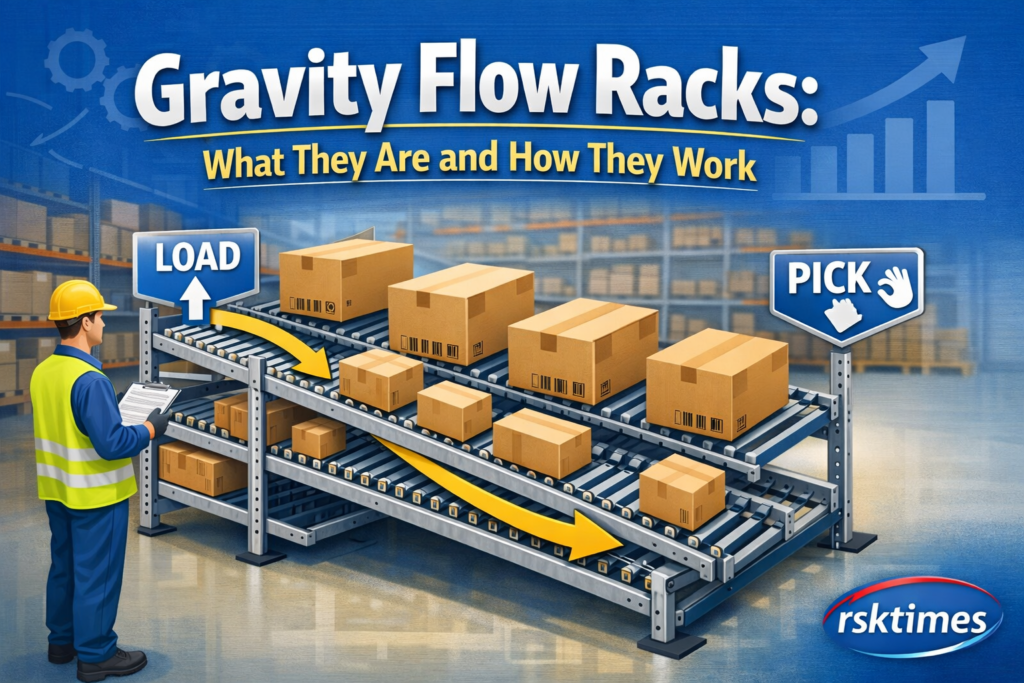
Gravity flow racks are a specialized type of storage system designed to use the natural pull of gravity to move products along an inclined surface from the back of the rack to the front. Unlike traditional shelving, where workers must manually pick and replace items, these racks allow inventory to flow automatically, ensuring that products are always presented in the correct order for picking. The main purpose of these racks is to support a first-in, first-out (FIFO) inventory system, which is essential for perishable goods, food and beverage storage, pharmaceuticals, and any other industry where the oldest stock needs to be used first. The racks are typically built with rollers or wheels on sloped tracks so that once a product is placed at the back, it gradually moves forward as items in front are picked. This self-feeding mechanism not only improves picking efficiency but also reduces labor costs and minimizes errors, as workers no longer need to constantly handle and organize stock manually. By organizing products into neat lanes, gravity flow racks create a streamlined workflow, making warehouses more efficient, safer, and easier to manage. For businesses dealing with high-volume operations, these racks are a game-changer, providing both time and cost savings while maximizing storage density.
The design of gravity flow racks can vary depending on the type of product being stored, the weight of the items, and the space available. Some racks are designed for small cartons or totes, while others are robust enough to hold heavy pallets and bulk items. The inclined track system is carefully engineered to control the speed at which items move, often using brakes or dampeners to prevent products from rushing too fast and causing damage. Additionally, lanes are often equipped with dividers and guides to keep products aligned and ensure smooth movement, which helps maintain a consistent flow without jams or blockages. The versatility of gravity flow racks also extends to multi-tier systems, which allow warehouses to make use of vertical space while keeping stock organized and accessible. Companies have found that integrating these racks with inventory management systems allows for real-time tracking of stock, further improving accuracy and reducing waste. In short, understanding gravity flow racks what they are and how they work is critical for businesses aiming to optimize warehouse operations, enhance productivity, and maintain a lean, organized, and safe storage environment. These racks represent an intelligent solution that combines mechanical design with operational strategy, allowing inventory to flow naturally while keeping the process simple and efficient.
How Gravity Flow Racks Work: The Mechanics Behind the System
The way gravity flow racks work is both simple and ingeniously efficient, relying on basic physics to create a self-feeding storage system that reduces labor and increases productivity. At the core of these racks is a slight incline or slope built into each lane of the rack, which allows products to move forward automatically under the force of gravity. When an item is placed at the back of the lane, it naturally rolls or slides toward the front, where it becomes immediately accessible for picking. The movement is smooth and controlled thanks to rollers, wheels, or track systems designed to handle the weight and size of the stored items. Some high-end systems include speed controllers or brakes to ensure heavier or delicate products do not move too quickly, preventing damage or accidents. This simple yet effective design supports a first-in, first-out (FIFO) rotation of products, which is particularly valuable for businesses that manage perishable goods, pharmaceuticals, or any inventory that must be used in the order it arrives. By automating the movement of products, gravity flow racks minimize the need for workers to constantly rearrange stock, cutting down on time, reducing fatigue, and improving overall warehouse efficiency.
The mechanics of these racks are further enhanced by thoughtful design elements such as lane dividers, guides, and multi-tier systems that allow warehouses to maximize storage space while maintaining easy access to each item. The racks can be configured for different product sizes and weights, from small cartons and totes to heavy pallets, making them highly versatile for various industries. In addition, gravity flow racks can be integrated with inventory management and warehouse tracking systems, providing real-time visibility of stock levels and helping prevent errors such as stockouts or overstocking. The natural flow of products also reduces clutter and creates a safer working environment, as items are less likely to fall or be misplaced compared to traditional shelving. Overall, understanding how gravity flow racks work highlights their dual benefit of mechanical simplicity and operational sophistication. They are not merely storage racks; they are intelligent systems that combine physics, engineering, and workflow optimization to create faster, safer, and more organized warehouses that can handle high-volume operations with minimal manual intervention.
Types of Gravity Flow Racks
Gravity flow racks come in a variety of designs to meet the unique needs of different warehouses and industries, offering flexibility in handling products of all shapes, sizes, and weights. One of the most common types is the carton flow rack, which is designed for small to medium-sized cartons, bins, and totes. These racks use roller lanes or wheel tracks that allow individual cartons to slide forward as items at the front are picked, making them ideal for high-speed order picking in e-commerce fulfillment centers, retail backrooms, and light industrial environments. Carton flow racks are particularly effective for businesses that need to rotate stock frequently, as they ensure that older products are always at the front, reducing waste and maintaining freshness for perishable items. Another popular type is the pallet flow rack, which is built to handle heavier loads such as full pallets of bulk goods. Pallet flow systems use wider lanes with sturdier rollers or wheels and a stronger frame to support significant weight while maintaining smooth, controlled movement. This type of rack is commonly used in large distribution centers, cold storage facilities, and manufacturing warehouses, where both high-density storage and first-in, first-out inventory rotation are critical.
In addition to these primary types, there are multi-tier gravity flow racks and modular systems that allow warehouses to make the most of vertical space while keeping inventory organized and accessible. Multi-tier systems feature multiple levels of inclined lanes stacked on top of each other, allowing for deep storage without expanding the warehouse footprint. Modular gravity flow racks can be customized to fit specific product sizes, lane widths, and incline angles, giving businesses the flexibility to reconfigure their storage as inventory needs change over time. Some advanced systems even integrate with automated warehouse management technologies to provide real-time stock tracking, order picking optimization, and seamless replenishment workflows. Whether used for cartons, totes, pallets, or a combination of product types, gravity flow racks offer a versatile, efficient, and scalable storage solution that can adapt to virtually any operational requirement. Understanding the different types of gravity flow racks helps businesses choose the right system for their warehouse, ensuring that the flow of products is smooth, organized, and optimized for maximum productivity and cost efficiency.
Key Benefits of Using Gravity Flow Racks
One of the most significant advantages of gravity flow racks is their ability to greatly improve warehouse efficiency and productivity. By allowing products to flow automatically from the back to the front of the rack, these systems reduce the time workers spend walking between shelves, searching for items, or rearranging inventory. This increased efficiency translates directly into faster order fulfillment, which is particularly valuable for businesses handling high volumes of products, such as e-commerce warehouses, distribution centers, and manufacturing facilities. The automatic first-in, first-out (FIFO) rotation also ensures that older stock is used before newer inventory, reducing the risk of product spoilage or obsolescence. In industries like food and beverage, pharmaceuticals, and chemical storage, this benefit is critical for maintaining product quality and compliance with safety standards. Beyond time savings, gravity flow racks help minimize labor costs, as fewer staff members are needed to pick, restock, and organize inventory. The organized lanes also reduce the likelihood of picking errors, as each product has a designated place and moves predictably along the track, improving both accuracy and overall workflow.
Another major benefit of gravity flow racks is their ability to maximize storage space while maintaining accessibility. These racks can be configured as multi-tier systems to utilize vertical warehouse space efficiently, making it possible to store more products in the same footprint compared to traditional shelving. They also contribute to a safer working environment by reducing clutter, keeping aisles clear, and preventing products from being stacked haphazardly. The versatility of these systems allows them to handle a wide range of product sizes and weights, from small cartons and totes to full pallets, without compromising on smooth movement or accessibility. Additionally, the controlled flow of products, often regulated by speed brakes or dampeners, ensures that items are handled gently, reducing damage and loss. Companies that adopt gravity flow racks often report not only improved operational performance but also measurable cost savings through reduced labor, less wasted space, and decreased product damage. Overall, the benefits of these racks extend far beyond mere storage; they enhance efficiency, safety, and organization, making them an essential tool for modern warehouses looking to optimize their operations and maintain a competitive edge.
Gravity Flow Racks vs. Other Storage Systems
When comparing gravity flow racks to other storage solutions, their unique advantages become clear, especially for businesses focused on efficiency, inventory rotation, and space utilization. Unlike static shelving systems, where products remain in one place until manually picked, gravity flow racks use the force of gravity to automatically move items forward, ensuring that the first product placed in the rack is the first to be picked. This natural flow of goods supports the first-in, first-out (FIFO) principle, which is essential for managing perishable goods, seasonal items, and time-sensitive inventory. In contrast, traditional shelving often leads to confusion, slower picking times, and an increased likelihood of expired or obsolete products being left unused. Gravity flow racks also allow for deeper storage and better organization, reducing clutter and creating a more visually intuitive system that guides workers toward efficient picking and replenishment. The operational simplicity of these racks, combined with their reliability and ability to handle continuous stock rotation, makes them an ideal solution for warehouses looking to modernize their storage systems without requiring complex automation or robotics.
Compared to other automated storage solutions like push-back racks or drive-in racks, gravity flow racks offer distinct advantages in both workflow and accessibility. Push-back and drive-in systems often follow a last-in, first-out (LIFO) approach, which can be problematic for perishable products or inventory requiring strict rotation. Gravity flow racks, on the other hand, maintain FIFO consistently, reducing waste and improving product management. They are also more ergonomic and safer, as products are presented at the front of the rack, minimizing the need for reaching, lifting, or using forklifts inside tight aisles. While some high-tech systems require significant investment and ongoing maintenance, gravity flow racks provide a simpler, lower-cost alternative that combines efficiency with reliability. Their adaptability allows them to store cartons, totes, or pallets in the same system, and multi-tier options make them suitable for warehouses of all sizes. By understanding the differences between these systems, businesses can make informed decisions that balance cost, efficiency, and operational needs, ensuring that their storage solution is both practical and scalable.
Applications of Gravity Flow Racks
Gravity flow racks are versatile storage systems that find applications across a wide range of industries, from warehouses and distribution centers to manufacturing plants and retail environments. In warehouses and distribution centers, these racks are particularly valuable for high-volume order fulfillment, as they allow workers to pick products quickly and accurately while ensuring proper stock rotation. E-commerce companies, for instance, rely on gravity flow racks to handle thousands of small cartons and totes daily, allowing them to maintain fast shipping times without sacrificing accuracy. In manufacturing and assembly lines, gravity flow racks are often used for line-side storage of components, providing just-in-time access to parts needed for production. This reduces downtime and keeps the assembly process running smoothly, as workers can retrieve materials without leaving their workstations. In retail backrooms and cold storage facilities, gravity flow racks help manage perishable products, such as fresh food, dairy, or beverages, by ensuring older stock is always used first. This not only prevents waste but also improves compliance with food safety regulations.
Beyond these common uses, gravity flow racks are increasingly being implemented in specialized environments that require both high-density storage and strict inventory control. In pharmaceutical warehouses, these racks are ideal for managing medications that have expiration dates, providing a clear FIFO system that minimizes the risk of distributing expired products. Similarly, in automotive and electronics industries, gravity flow racks store small to medium-sized components efficiently, allowing for rapid picking and replenishment without disrupting workflow. The modular design of many gravity flow racks means they can be tailored to fit unique spaces, whether it’s a narrow aisle, a multi-tiered warehouse, or a compact backroom. Companies that implement these systems often report measurable improvements in productivity, safety, and organization, making gravity flow racks a strategic investment for businesses aiming to optimize their storage and distribution processes. In every application, the ability of these racks to combine space efficiency, inventory control, and ease of access underscores why understanding gravity flow racks what they are and how they work is critical for modern warehouse management.
Designing a Gravity Flow Rack System
Designing an effective gravity flow rack system requires careful planning to ensure that it meets the specific needs of a warehouse while maximizing efficiency, safety, and storage density. The process begins by analyzing the types of products to be stored, their size, weight, and handling requirements, as well as the volume of inventory and frequency of picking. Proper measurements of aisle widths, rack height, and lane depth are critical, as these dimensions determine how many lanes can fit in a given space and how easily workers can access products. The incline angle of each lane must be carefully calculated so that items move smoothly to the front without sliding too quickly or becoming stuck. Adjustable features, such as removable dividers and modular lane widths, allow the system to accommodate different product types and quantities, providing flexibility as inventory changes. Some advanced gravity flow rack designs also incorporate dampeners or speed controllers to regulate movement, especially for heavy or fragile items, ensuring that products arrive safely at the picking face without damage. This thoughtful approach to design allows warehouses to optimize both space and workflow while maintaining a safe and organized environment.
Another important aspect of designing a gravity flow rack system is integrating it with operational workflows and technology to achieve maximum efficiency. Multi-tier systems can be employed to take full advantage of vertical space, while modular setups allow businesses to expand or reconfigure the racks as inventory needs evolve. Proper labeling and lane organization ensure that workers can easily identify items, reducing picking errors and increasing speed. Some warehouses integrate these racks with inventory management systems, allowing real-time tracking of stock levels, automated replenishment alerts, and enhanced control over first-in, first-out rotation. Safety considerations, such as ensuring stable installation, avoiding overloading, and maintaining clear aisles, are also critical to prevent accidents and maintain smooth operation. By carefully considering these design factors, businesses can create a gravity flow rack system that not only stores products efficiently but also supports faster picking, reduces labor costs, and improves overall warehouse productivity, making it a cornerstone of modern inventory management and material handling strategies.
Best Practices and Safety Considerations
Implementing gravity flow racks effectively requires adherence to best practices that ensure both efficiency and safety within the warehouse environment. One of the most important considerations is proper installation, which includes securely anchoring the racks to the floor and verifying that all lanes are correctly inclined to allow smooth product flow without risk of items sliding uncontrollably. Regular inspection and maintenance are also critical to prevent operational issues, such as misaligned rollers, worn tracks, or damaged lane dividers, which can disrupt the flow of inventory and create potential hazards for workers. Ergonomics should be considered when designing the height and positioning of the picking face to minimize strain on employees and reduce the risk of injury. Additionally, training warehouse staff on the correct use of gravity flow racks is essential, including how to place products properly, avoid overloading lanes, and handle items safely to maintain both product integrity and worker safety. Following these best practices ensures that the system operates smoothly, reduces downtime, and prolongs the lifespan of the racks.
Safety considerations extend beyond installation and maintenance, as warehouses must account for potential risks associated with moving products and high-density storage. It is important to use speed controllers or braking mechanisms on lanes to prevent heavier items from accelerating too quickly, which could cause damage or injury. Clear labeling and lane organization help reduce confusion and picking errors, while maintaining clean, unobstructed aisles allows workers to navigate the warehouse safely. Multi-tier gravity flow racks require additional caution, as higher racks increase the potential for falling objects if items are not secured properly. Businesses should also establish regular safety audits to ensure compliance with local regulations and internal policies, keeping both employees and inventory protected. By combining thoughtful design, proper training, and ongoing maintenance, gravity flow racks can operate as a highly efficient and safe storage solution, supporting faster picking, accurate inventory rotation, and a well-organized warehouse that meets modern operational demands.
Frequently Asked Questions (FAQ)
When exploring gravity flow racks, many warehouse managers and business owners have common questions about their functionality, suitability, and operational benefits. One of the most frequently asked questions is whether these racks are suitable for perishable inventory. The answer is a resounding yes, as the design inherently supports first-in, first-out (FIFO) inventory rotation, which is essential for products that have expiration dates, such as food, beverages, and pharmaceuticals. Another common inquiry relates to the incline angle of the lanes, which typically ranges from three to six degrees depending on the weight and size of the items being stored. This angle ensures a smooth flow without causing items to move too quickly, and proper adjustments can be made based on specific warehouse requirements. Business owners also often ask if gravity flow racks can be retrofitted into existing warehouse spaces. Fortunately, modular designs allow for flexible installation in a variety of environments, whether adding a few lanes to an existing shelving system or installing multi-tier racks in a new warehouse layout. These adaptable features make gravity flow racks a highly versatile solution for improving operational efficiency.
Other frequently asked questions revolve around maintenance, cost, and scalability. Many users want to know how much upkeep is required, and while gravity flow racks are generally low maintenance, routine inspection of rollers, lane alignment, and safety components is crucial to prevent disruptions and maintain smooth operation. Questions about cost often arise as well, especially when compared to traditional shelving or automated systems. While the initial investment may be higher than simple static racks, the long-term savings in labor, increased picking speed, reduced errors, and optimized inventory rotation often justify the expenditure. Scalability is another important concern, particularly for growing businesses. Modular and multi-tier systems allow companies to expand capacity as needed, providing a future-proof solution that adapts to changing inventory volumes and operational demands. Overall, the FAQ section highlights that understanding gravity flow racks what they are and how they work is not just about mechanics but also about applying them strategically to improve workflow, maximize efficiency, and maintain a safe, organized warehouse environment.
Conclusion
In conclusion, gravity flow racks represent a highly efficient and versatile storage solution that has transformed the way modern warehouses, distribution centers, and manufacturing facilities manage inventory. By leveraging the simple yet powerful force of gravity, these racks allow products to move automatically from the back to the front, ensuring proper first-in, first-out (FIFO) rotation, reducing labor, and improving picking accuracy. Their design accommodates a wide range of product sizes and weights, from small cartons and totes to full pallets, making them suitable for virtually any industry that values efficiency, organization, and timely inventory management. Businesses that implement gravity flow racks often experience significant improvements in workflow, including faster order fulfillment, better space utilization, reduced product damage, and a safer environment for workers. The combination of mechanical simplicity and operational effectiveness makes these systems a cornerstone for warehouses striving to meet modern demands while keeping costs and inefficiencies under control.
Moreover, understanding gravity flow racks what they are and how they work is essential for any business looking to optimize storage solutions and maximize operational productivity. From careful design and planning to proper installation, maintenance, and safety practices, every aspect of a gravity flow rack system contributes to smoother workflows, reduced errors, and enhanced inventory control. The flexibility of modular and multi-tier systems ensures that these racks can grow and adapt alongside the business, providing long-term value and sustainability. Whether for high-volume e-commerce operations, cold storage facilities, manufacturing lines, or retail warehouses, gravity flow racks offer a reliable, efficient, and cost-effective approach to managing inventory. Investing in such systems not only enhances operational efficiency but also strengthens a business’s ability to meet customer demands quickly and accurately, ultimately driving competitiveness and success in today’s fast-paced market.